netsi-style-like-poetic-desert Version 1.0.0
Kaldes med /netsi-style-like-poetic-desert
Kig væk fra et landskab et øjeblik, og du kunne sværge på, at det har flyttet sig. Den fornemmelse tegner denne skill. En dirrende penstreg, en vid ørkenscene og flade, solbagte farver tegner dit foto, din scene eller din idé om til en færdig illustration. Og så tricket: du forbliver præcis dig selv, mens klipperne, månen og horisonten stille flytter rundt bag dig. Lad stedet ligge stille, eller lad det vandre.
Laver et færdigt billede ud fra et foto, en scenebeskrivelse eller en kontekst, der skal illustreres. Forener en dirrende, levende penstreg, lange udtryksfulde figurer, en vid ørkenscene, omgivelser der stille skifter form og bogstavelige billedordspil i flade, håndkolorerede ørkenfarver. Tilbyder valgfrie justeringer af baggrundens forvandling, farver og ordspil samt et sammenligningsgrid. Dialogen følger dit sprog; de interne billedprompts er engelske.
Ingen Claude Code? Hent SKILL.md og indsæt indholdet som din prompt i en hvilken som helst AI-chat.
Eksempler på prompts
Forslag til at kopiere og prøve. Det er ikke optagne svar.
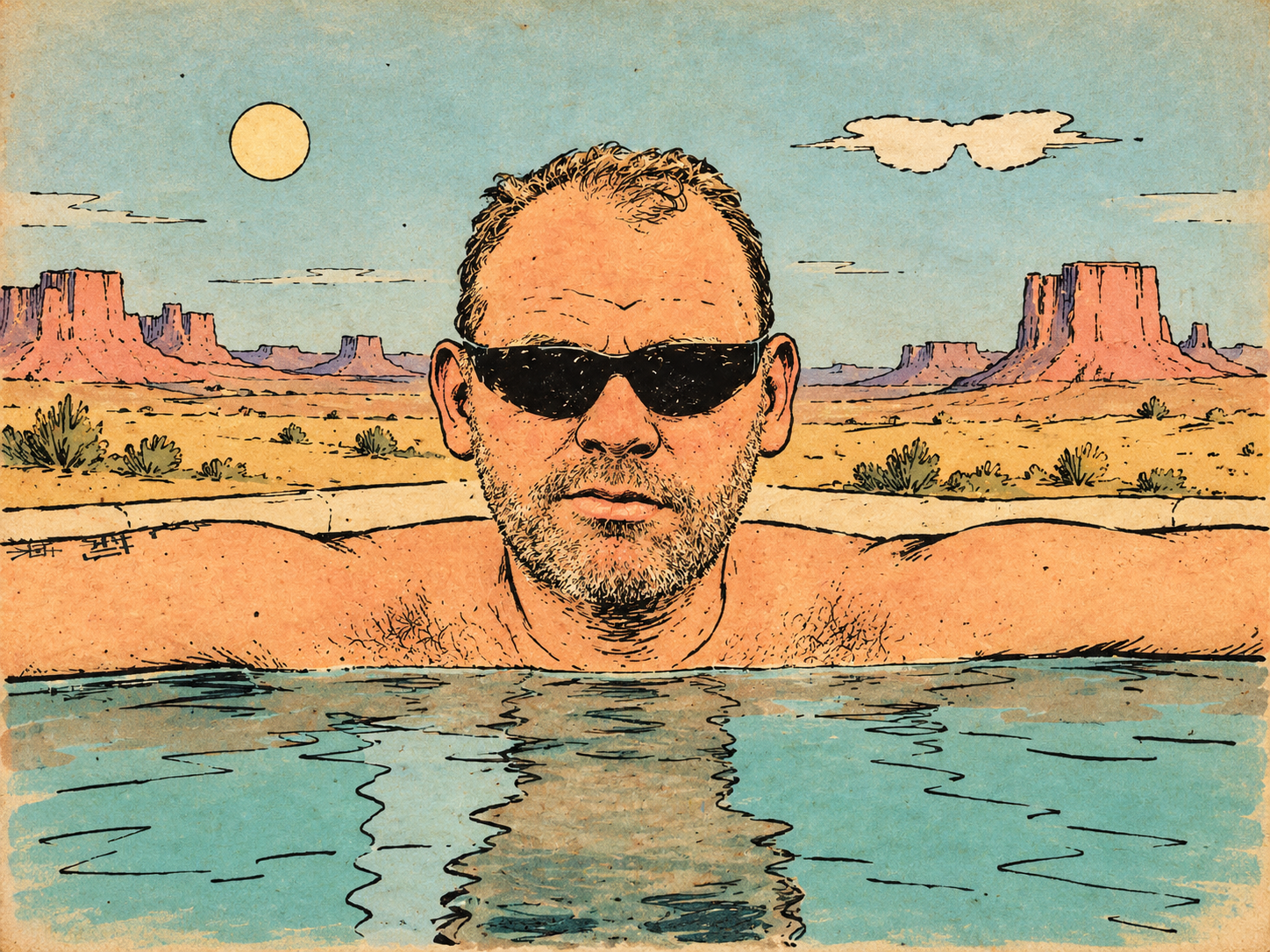
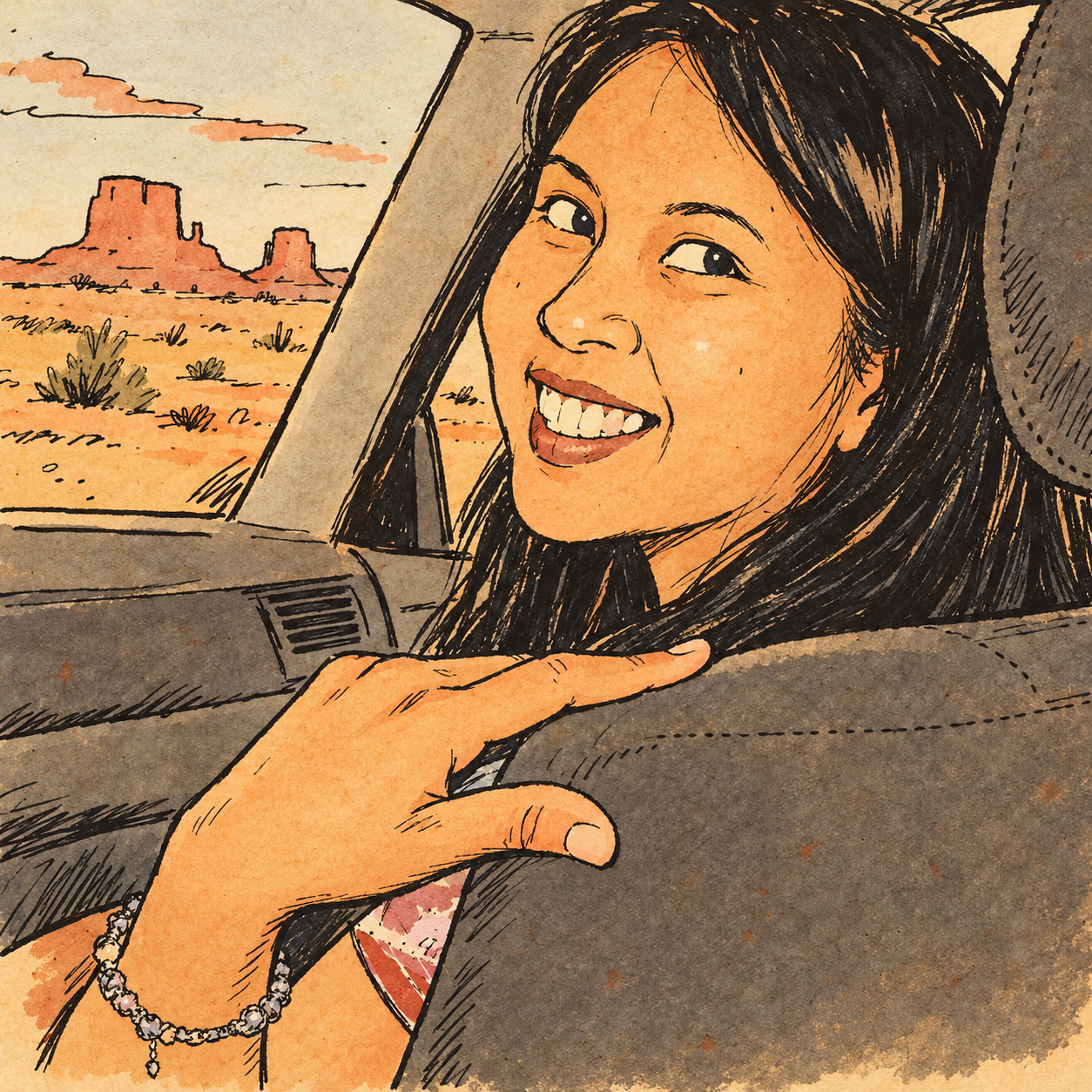
/netsi-style-like-poetic-desert Brug stilen på mit vedhæftede foto. Bevar ansigtet, udtrykket, håndens gestik og omgivelserne, så de kan genkendes. Brug standardstilen.
→ Du får en færdig illustration af dit foto. Skillen undersøger billedet først, bevarer dig præcis, som du er, og lader baggrunden glide stille over i en ørkendrøm.
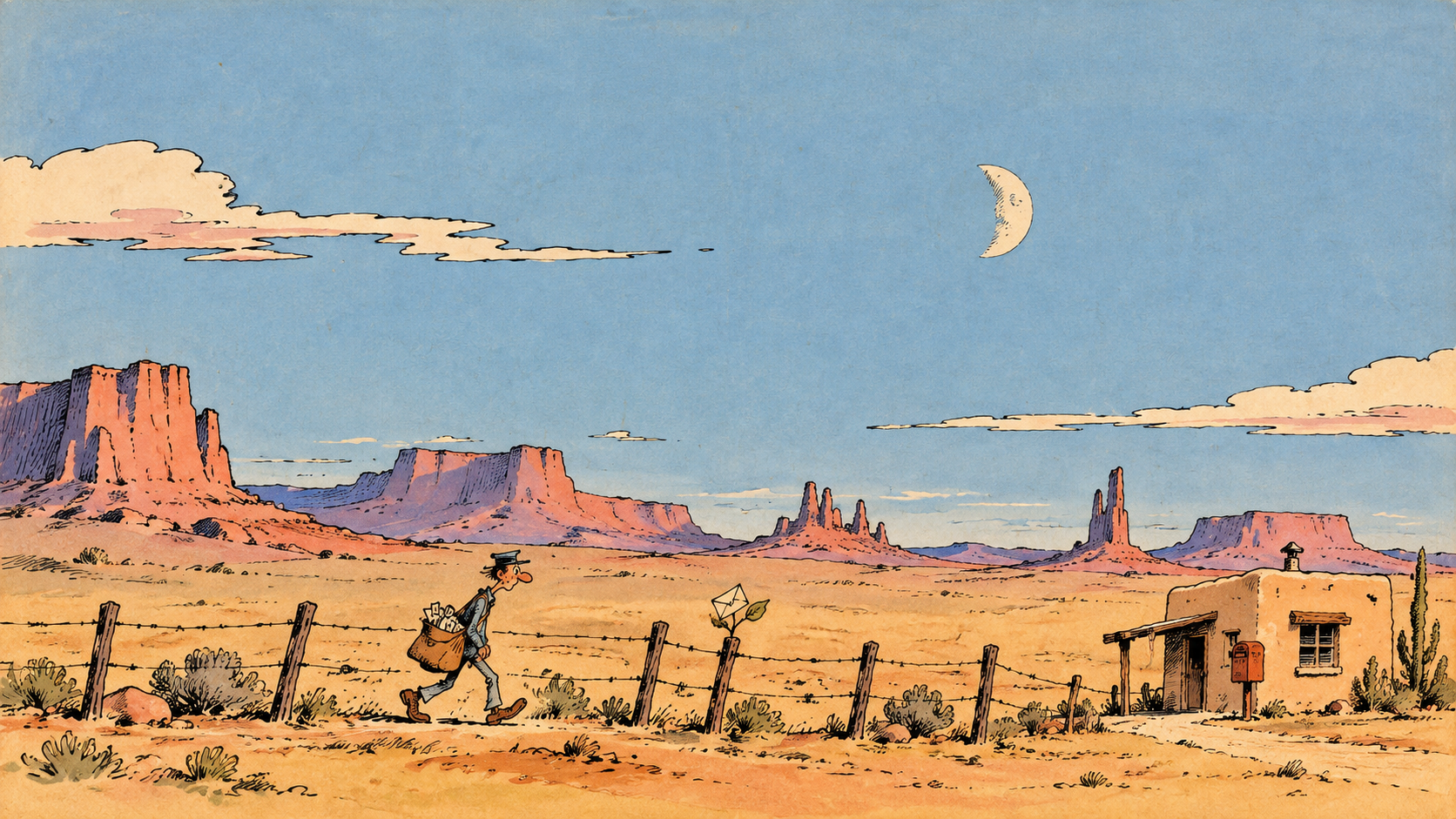
/netsi-style-like-poetic-desert Et ensomt postbud går langs et hegn mod et lille lerhus-posthus under en enorm himmel. Klipperne bag postbuddet skifter hele tiden form. 16:9, ingen tekst.
→ Du får en færdig scene med dirrende penstreg, lav horisont, masser af tom himmel og flade, solbagte farver. Postbuddet står fast, mens klipperne bagved får nye former.
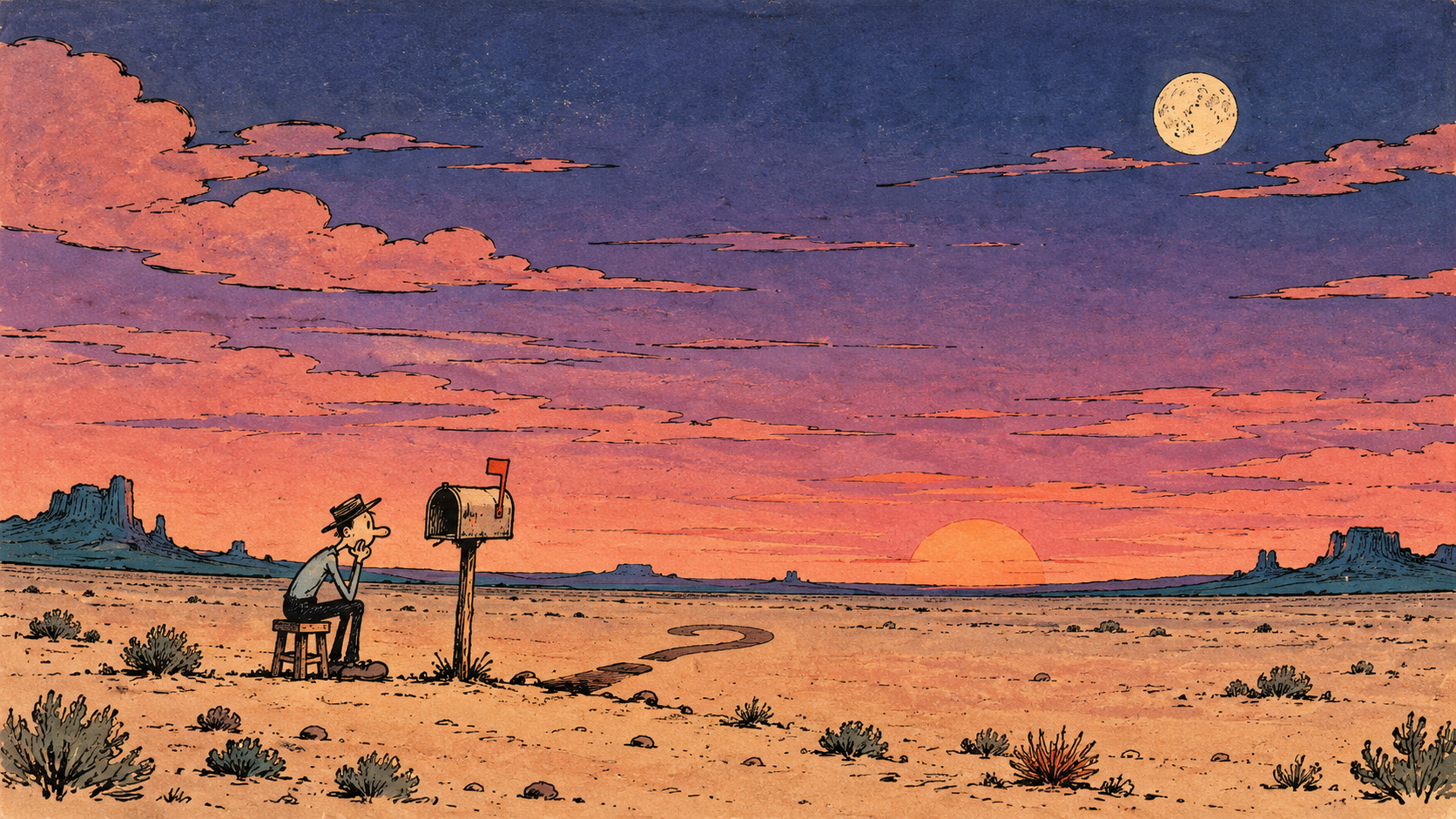
/netsi-style-like-poetic-desert Illustrér følelsen af at vente på et svar, der aldrig kommer, til toppen af et blogindlæg. 16:9. Ingen tekst i billedet.
→ Du får et originalt billeddigt: en lille figur venter ved en postkasse midt i ørkenen, mens solen og månen deler himlen. Følelsen kommer frem uden ord eller opdigtede fakta.
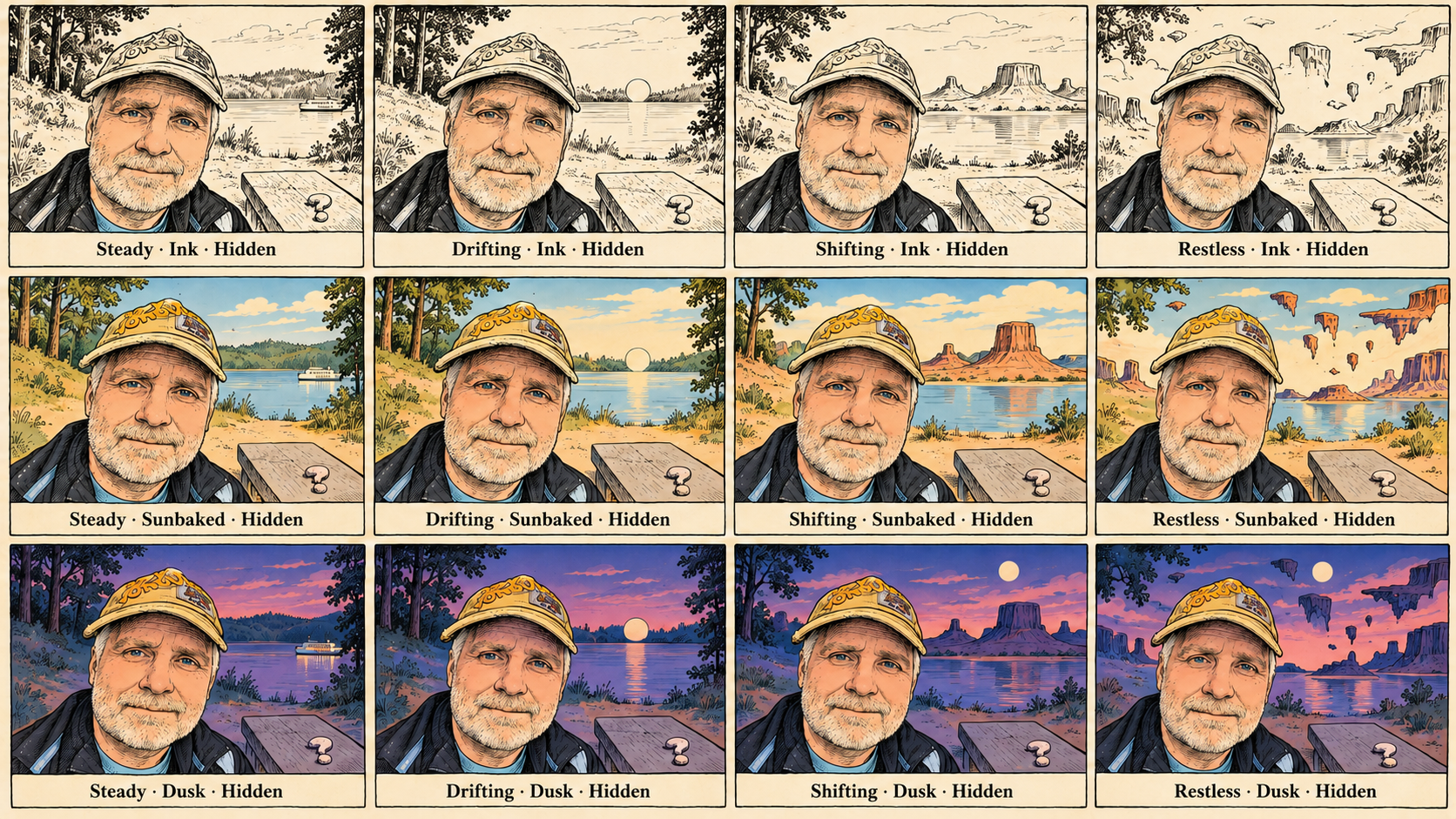
/netsi-style-like-poetic-desert Brug mit vedhæftede portræt ved søen til at vise Scenery shift og Color i et grid på 4 × 3. Behold Wordplay på Hidden. Ét 16:9-billede med engelske tweak-værdier under hvert felt.
→ Du får 12 sammenlignelige illustrationer i ét billede. Kolonnerne varierer, hvor meget baggrunden forvandles, rækkerne varierer farverne, og samme person kan genkendes i hvert felt.
Poetic Desert
Turn a familiar subject into a lyrical pen-and-ink desert illustration. A supplied face stays recognizable; a described scene stays yours; a context becomes a quiet visual poem with one small joke in it. The subject holds still while the world behind it drifts. Deliver the image itself.
Required capabilities and resources
- Use an image-generation/editing tool. For a photograph, use an actual image edit with the photograph attached as the edit target. Do not reconstruct it from a description alone.
- Use netsi-prompt-generator for the internal image prompt. If it is installed, read its instructions. Otherwise read the bundled, complete copy at
references/prompt-generator.mdand apply that skill's workflow to the prompt subtask. - Read
references/style-profile.mdbefore composing the prompt, andreferences/tweaks.mdwhen adjustments or a comparison are relevant. - Inspect the bundled generated examples in
https://assets.netsi.dk/skills/netsi-style-like-poetic-desert/images/as anonymous visual calibration, especiallyhttps://assets.netsi.dk/skills/netsi-style-like-poetic-desert/images/04-desert-traveler.pngfor the desert stage and color andhttps://assets.netsi.dk/skills/netsi-style-like-poetic-desert/images/02-car.pngfor figure drawing. When the image tool supports multiple references, supply the input photograph as the edit target and a relevant bundled illustration as the style reference only. In a new scene, the bundled illustrations are style references only. Never copy their subject, composition, identity or labels into the user's result. Do not redistribute historical research scans. - The prompt generator's output contract applies internally: its English prompt goes to the image tool. The parent skill's user-facing deliverable remains the finished image.
- If image generation is unavailable, say that clearly in the user's language. Do not label an English prompt or a mockup as a generated image. Never silently substitute a different provider or paid API.
Recognize one of three inputs
A — Image. Inspect the photograph. Record the person or subject, face proportions, age, expression, pose, hands, clothing, glasses, recognizable accessories, objects, framing and meaningful setting. Preserve these unless the user explicitly asks to change them. Retain the input aspect ratio by default. A style reference is a different role from the edit target; do not swap them.
B — Scene. Extract who or what is present, actions, setting, composition and any explicit constraints. Keep the scene's content. A scene that is not set in a desert keeps its setting: the desert vocabulary then appears through open space, ground line, sky and the drifting background, not by replacing the location. If no aspect ratio is supplied, use 16:9 for a scene; follow a stated medium such as a square social post instead when provided.
C — Context. Extract the message, audience, mood and destination from the supplied text or conversation. Choose a concrete, original visual metaphor, ideally a figure of speech that can be drawn literally. Do not invent facts, numbers, quotations or branding. Make the message understandable without text by default. Ask only if materially different interpretations prevent a useful result. Use the requested destination's aspect ratio, otherwise 16:9.
If inputs are combined, infer their roles: for example, an image is the subject and a paragraph supplies the illustration's message. Ask one focused question only when the roles conflict.
Optional adjustments: zero to three
The canonical controls are Scenery shift, Color, and Wordplay. Values and defaults live in the tweaks reference. Never weaken the identity of this style by changing its core pen line to a generic filter or another medium.
If the request is clear, apply the explicit values or defaults and generate immediately. Do not require a questionnaire. If the user asks to explore, requests a materially ambiguous adjustment, or a meaningful unresolved choice would change the result, use an AskUserQuestion interaction: the environment's interactive question tool, or the same concise question in chat when no such tool is available.
Offer at most three relevant tweak controls. Ask one focused question at a time, explain its visual effect in plain language, place the recommended/default answer first, and allow a custom answer and discussion. Where tool schemas add free text automatically, do not duplicate it with a fake option. Infer answers already supplied. Do not mistake silence for consent to a material change. If the user simply wants the default image, no question is needed.
Translate questions, explanations and choices into the user's language. Canonical parameter values stay English in prompts and grid labels. Natural-language requests such as "behold stedet, som det er" may be mapped directly to a suitable value (Scenery shift = Steady) without asking again.
Respect a scene's stated lighting and content: a night scene can imply Color = Dusk, and a request for "no jokes" implies Wordplay = None. Stated content takes precedence over a style default.
Generate, inspect, deliver
- Inspect the input and identify its type and invariants.
- Load the detailed style profile. Resolve any relevant optional adjustments.
- Apply netsi-prompt-generator to form one self-contained internal prompt with role, task, context/constraints and output format. Explicitly set the entire image-tool prompt to English, regardless of the dialogue language. Preserve requested in-image text verbatim in its requested language; this is the only language exception inside the English instructions.
- Include the profile's core traits, their priorities, selected tweak values and the input's exact preservation constraints. If Wordplay is not None, choose the pun yourself from the subject or message and describe it concretely in the prompt. Use descriptive traits only. Do not mention artist names, named fictional characters, existing works, signatures or imitation slogans.
- Generate or edit the actual image. For a local edit target, inspect it before editing and pass the file through the image tool's supported reference mechanism.
- Inspect the result: recognize the subject; check face, expression, accessories and hand gesture; check scene content; check the wobbling pen line, flat hand-colored tones, open desert stage, the requested amount of scenery shift and any visual pun; check any requested lettering. The style must influence the drawing, not merely tint the photograph or paste cacti into the background.
- If a material defect exists, make a focused revision and inspect again. Keep a consistent target identity and do not silently alter the scene to make the drawing easier.
- Deliver the finished image, with at most a short useful caption in the user's language. Keep the internal prompt hidden unless the user explicitly asks for it. Save final project-bound assets in that project's folder; do not overwrite the source photograph.
Never turn a person into an animal or a known cartoon character, and never add a pun on the face or body that changes the person's identity. The drifting scenery belongs to the background; the subject stays put.
Comparison grids
When requested, create one 16:9 image with 4 columns × 3 rows (12 image cells). Use the same subject, identity, pose, objects and crop in every cell. Reserve a legible label strip under each image, inside the overall canvas. Labels contain the exact English parameter names and values, never artist names. Use the schedule in references/tweaks.md: it includes the default and varies Scenery shift and Color while keeping Wordplay at Hidden. A matrix may explore Wordplay instead if requested, but must state the exact changed values.
Generate the artwork with the image tool. Use supported layout/text composition tools to assemble a precise grid if available; do not use code to imitate the illustration or recolor a photograph as a substitute. A single image-tool call may render the complete labeled grid. Verify 12 cells, order, visible differences, literal labels and a 16:9 canvas (allow one pixel of integer raster rounding) before delivering. Regenerate if lettering or structure is wrong.
Do not claim pixel-identical identity or perfectly isolated experimental control: image generation can vary details. Aim for faithful, visually comparable variations and disclose a material limitation if it remains.
Start with an example
- Attach a photograph: "Apply this style. Keep the face, pose and surroundings recognizable."
- Describe a scene: "A lone mail carrier walks along a fence line toward a small adobe post office under a huge sky. The mesas behind them keep changing shape."
- Supply context: "Illustrate the feeling of waiting for an answer that never comes, for a blog post header. No text in the image."
- Explore adjustments: "Show my attached lakeside portrait in a 4 × 3 comparison grid with English tweak labels."
See EXAMPLES.md for actual generated outputs, source photos and the comparison grid.
Buy me a coffee :-)
Hvis du kan bruge disse skills, kan du støtte arbejdet.
